La pintada
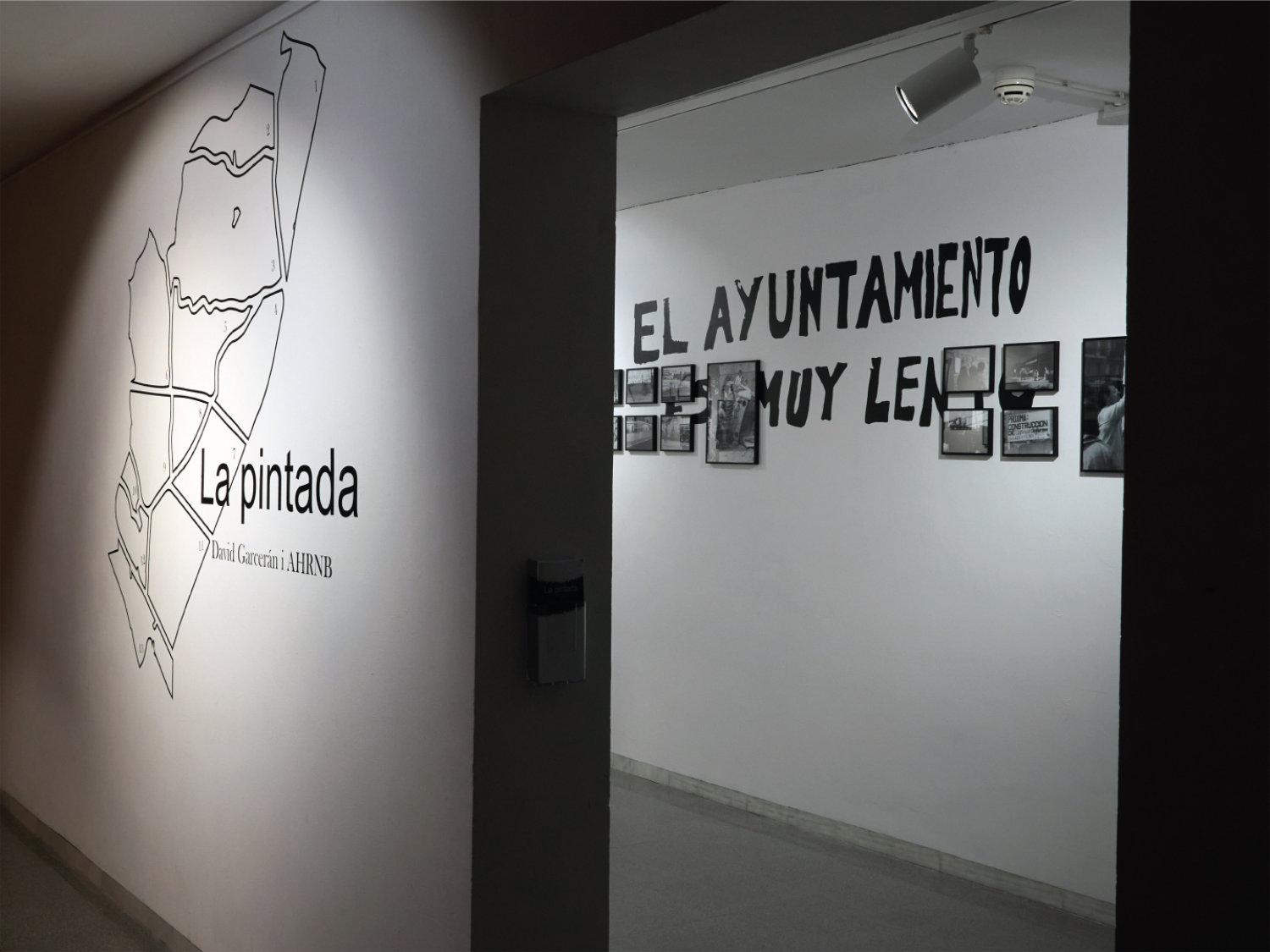
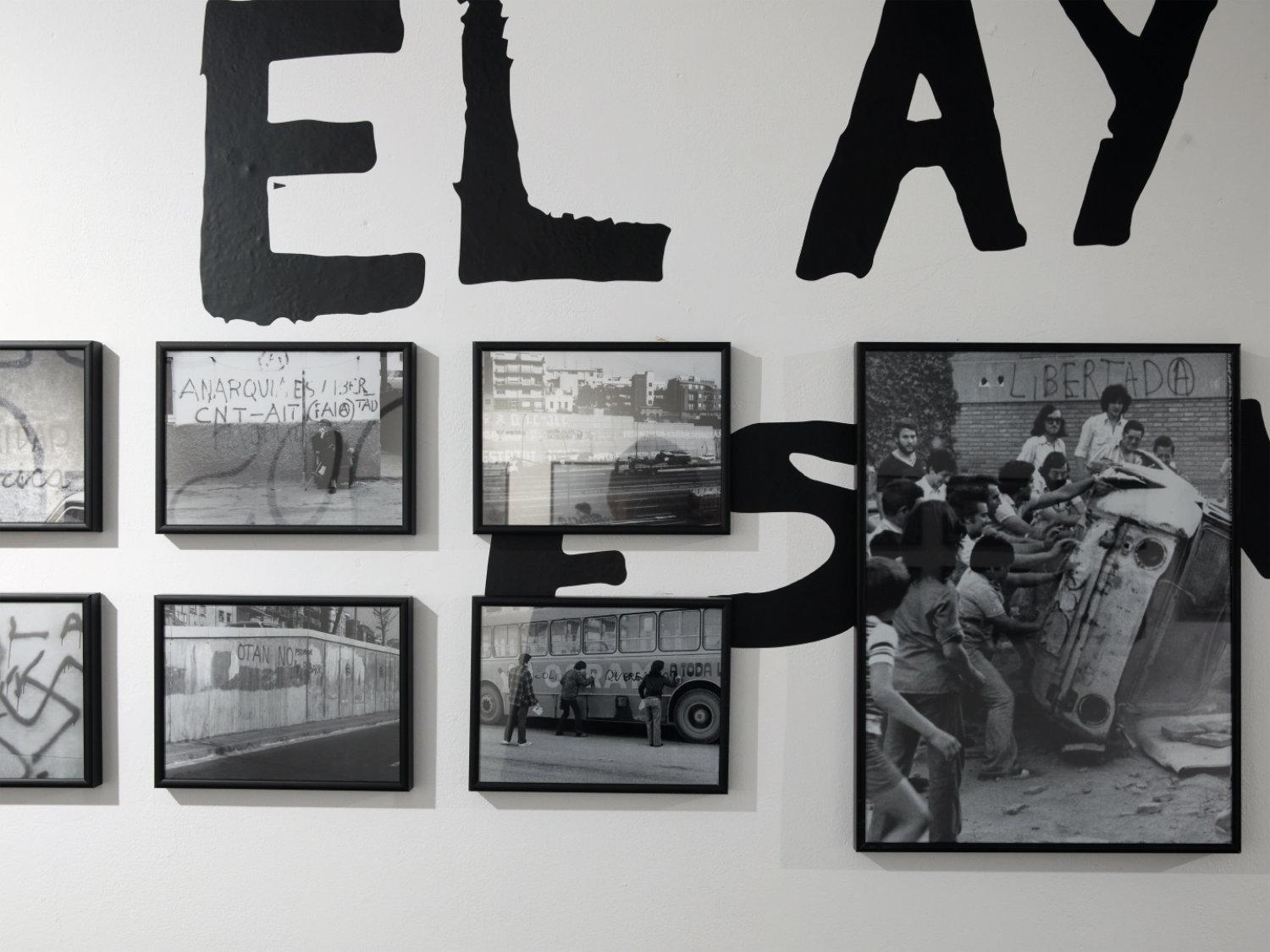
Some ideas do not require grandiose language. Protests produce slogans that are easy to remember and repeat, extending the life of a message far beyond the direct action itself. A stain appearing on layers of paper, chalk, or paint reminds us that someone had once been there. And this has never been a matter of fashion, for the repeated hammering of phrases from street to street continues to serve as a form of expression.
Graffiti can be as simple as the name of a street without a sign, a declaration of love, or an egotistical signature filling an empty corner. It can also be the name of a bar above its entrance, a threat, or the circled “A” of anarchism—an enduring classic. Some read it as philosophy, others as poetry, and others still as urban art. Its detractors, of course, will always see it as dirt, something to be erased in pursuit of a sterile, hygienic city.
The photographers featured in this small exhibition were among those who did not turn away from graffiti. Thanks to their work, these scattered words offer us a glimpse of the people who, in moments of urgency, found powerful allies in walls and banners as a means of making themselves heard. Photography extends the life of something that was only ever meant to be seen in its original context. Once captured by the camera, it inevitably loses part of its original meaning. Removed from its surroundings, graffiti is recycled into new ideas, and even when it uses the same words, the possible combinations are endless.
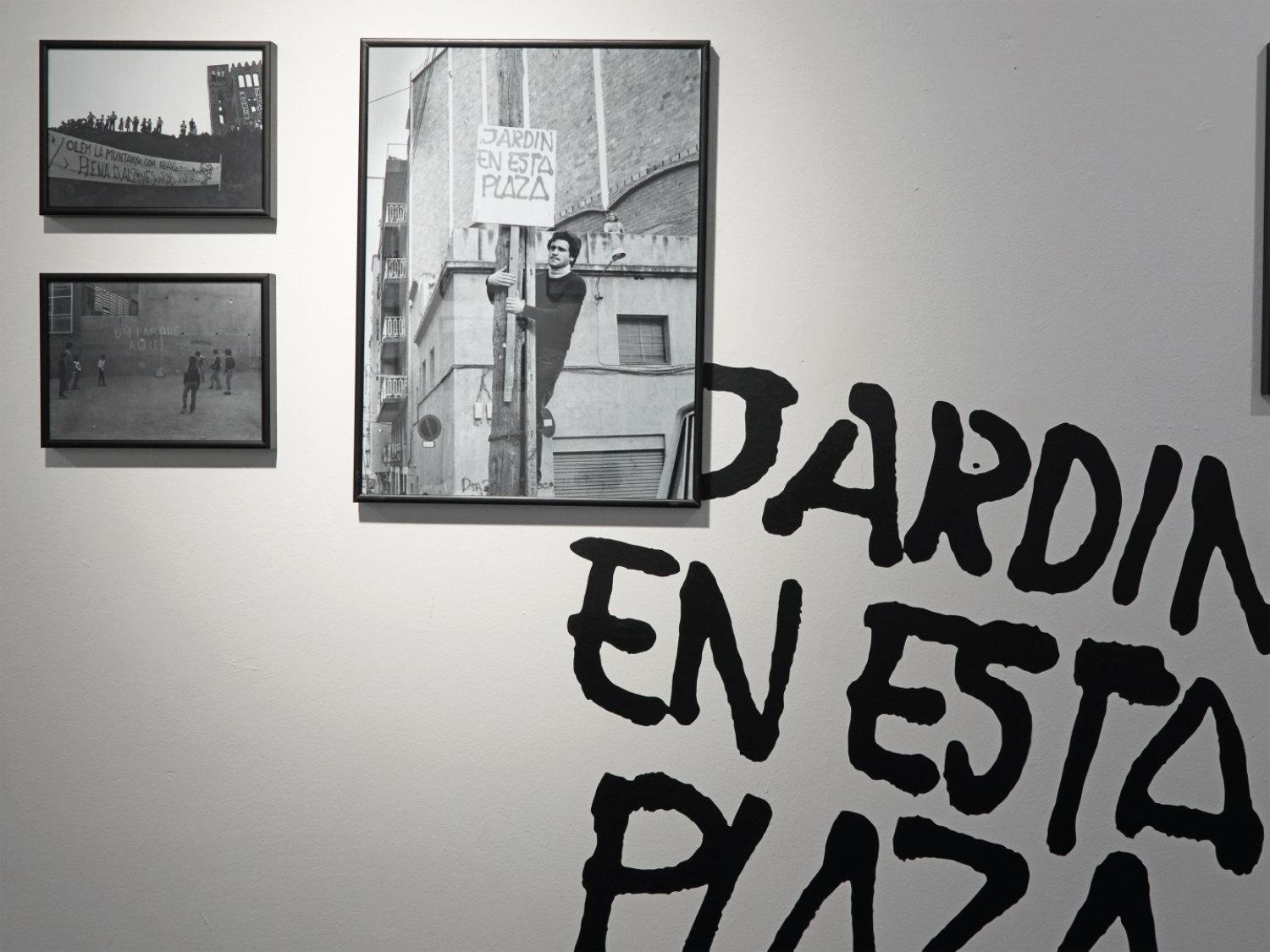
Some photographers incorporated graffiti ingeniously into their compositions, while others captured it head-on, presenting it raw and without embellishment. At other times, spray-painted messages quietly filter into otherwise idyllic views of the neighbourhood. In this way, Nou Barris is portrayed through its protests and countless other messages, through murals and banners that reveal the voices of residents who, throughout its history, chose to speak through its walls.
About the Exhibition
This exhibition is the result of a collaboration with the Historical Archive of Roquetes–Nou Barris (Arxiu Històric de Roquetes - Nou Barris). Over six months, we explored the archive’s photographic collection, which contains tens of thousands of original photographs. Among its most significant holdings are anonymous images alongside the documentary work of photographers such as Kim Manresa, Eva Orti, Ginés Cuesta and Arni Gil, among many others.
The exhibition is divided into three sections: political and organisational graffiti, the struggle for schools, and other neighbourhood campaigns concerning green spaces, public transport and related issues. This structure merely provides context for the photographs. The graffiti stands on its own, just as it does in the street, where it appears without any accompanying explanation.
The Walls Speak
The Beginnings of Graffiti in the Photobook
Photography’s relationship with the collection and documentation of recurring visual elements has been present throughout the history of the medium. Graffiti has probably existed in one form or another for as long as people have marked walls, but it was not until May 1968 that it found a place within photography, allowing it to be reproduced widely and to emerge as a mass medium of expression.
That month, the walls of Paris were covered with spray-painted messages. Hundreds of slogans invited passers-by to reflect on the struggles of the student movement. Journalist Julien Besançon gathered these writings in the now-iconic Les murs ont la parole (Tchou, 1968), a book that influenced several generations and firmly established graffiti and photography as a powerful partnership for cultural and political exploration.
Not long afterwards, though on the other side of the Atlantic, another landmark publication appeared in 1972: Golden Boy as Anthony Cool (Dial Press, 1972), published in New York. Featuring photographs by James Hinton and texts by Herbert Kohl, the book documented the earliest expressions of what we now recognise as graffiti culture. It brought together dozens of messages sprayed, chalked or scratched onto walls and other surfaces by people ranging from children to adults in their spare time. Personal names, gang symbols, lovers’ names enclosed in hearts—marks that may have seemed insignificant at the time—are now regarded as valuable evidence of the visual culture of the 1960s and early 1970s. Today, the book is considered one of the earliest documents of the international graffiti movement that would flourish in New York only a few years later.
In Spain, graffiti of every kind existed long before 1976. Yet little effort was made to document these spontaneous expressions on walls, perhaps because of the risks they entailed or simply through lack of interest. It was only in 1976 that graffiti became prominent enough in public life to be regarded as a social problem, to the point that Madrid City Council even considered banning the sale of spray paint.
During Spain’s democratic transition, the referendum on the Political Reform Act paved the way for the country’s first democratic elections. Walls became saturated with campaign posters, many of which were scratched, painted over or defaced by political opponents. Graffiti accumulated in overlapping layers until messages became almost impossible to decipher, while competing slogans fought for space and visibility. This visual landscape was documented by Equipo Diorama in Madrid, a collective of photographers who later published Pintadas del referéndum (Equipo Diorama, 1977). Without attempting a scientific reading, the book approaches its subject with irony and humour, combining very little text with a strong documentary impulse that preserves the visual memory of the period.
A similar project, though broader in scope, appeared in Barcelona under the title Pintadas Pintadas – Barcelona: de Puig Antich al Referèndum (La Gaia Ciència, 1977). Produced by the Foto FAD collective, the publication was the result of a systematic effort to document graffiti beginning in 1974, eventually recording around six thousand examples. As its subtitle indicates, the book documents graffiti produced between the execution of Salvador Puig Antich and the 1976 referendum, preserving an extraordinary visual record of one of the most politically transformative periods in Spain’s recent history.
Images from the website of the coordinator Mateo Pérez González.